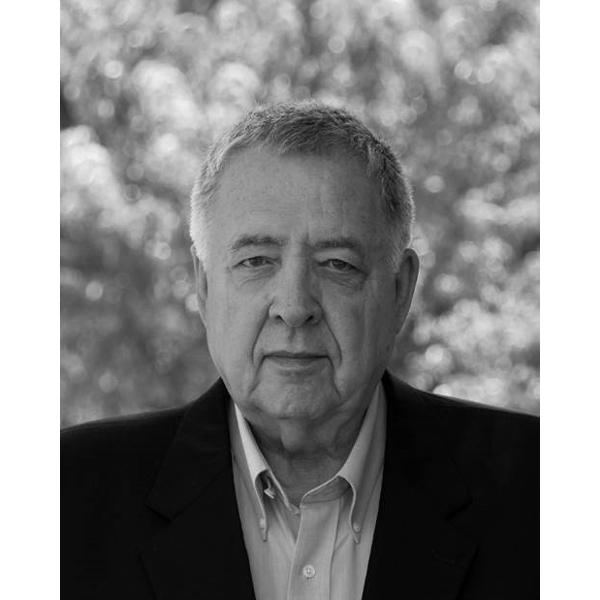
Gregory L. Hillhouse Professor

Born Greenville, South Carolina, 1955.
University of South Carolina, B.S., 1976.
Indiana University, Ph.D., 1980.
California Institute of Technology, Postdoctoral Research Associate, 1980-83.
The University of Chicago, Professor, 1983-.

Accolades

2009  Starkey Duncan Award, University of Chicago

2005  Visiting Professor of Chemistry, Massachusetts Institute of Technology

2002  Visiting Associate in Chemistry, California Institute of Technology

1998  Visiting Scientist, Symyx Technologies

1997  Llewellyn John and Harriet Manchester Quantrell Award for Excellence in Undergraduate Teaching

1990-92  Union Carbide Innovation Recognition Award

1989-91  Alfred P. Sloan Foundation Research Fellow

1979  William Nebergall Award for Graduate Research


OFFICE: GCIS E 419B, 929 E. 57th St., Chicago, IL 60637

PHONE: (773) 702-7057

FAX: (773) 702-0805

E-MAIL: g-hillhouse@uchicago.edu

WEB: http://glh-group.uchicago.edu/

RESEARCH INTERESTS:

Research in the Hillhouse group focuses on developing new methods and strategies in synthetic inorganic and organometallic chemistry, and applying them to the discovery and study of new reactions. Much of our current attention is on the chemistry of small-molecule activation by nickel and other group 10 metals. Some general themes of projects in the group include:

 

  • Multiple bonding with late-transition metals
  • Group-transfer catalysis
  • Carbon-heteroatom (C–N and C–O) bond-forming reactions related to catalysis

  • Chemical conversion of CO2 to useful chemicals and fuels
  • Discovery of new reactions for organic synthesis
  • Study of highly-reactive nitrogen hydrides and oxides (like HN=O) related to biology


Prior to 2001, the chemistry of Ni, Pd, and Pt was dominated by transformations involving manipulations of σ-bonded ligands (such as in well-studied “cross-coupling” reactions). Our work on metal-ligand multiple bonding in three-coordinate complexes of nickel (illustrated below for (dtbpe)Ni=NMes) has resulted in a paradigm shift in the way chemists think about multiple bonding with late-transition metals and has stimulated extensive research activity in this area in labs worldwide. We are interested in exploiting the unique reactivity of these multiply-bonded nitrene (and carbene) functional units in group-transfer reactions.


Current work in the group involves even lower coordination-number complexes: highly reactive 2-coordinate species that are sterically stabilized by very bulky ligands. We have reported a fascinating linear, 2-coordinate imido complex, (IPr*)Ni=N(dipp), shown below, and described its reactivity.


These L(1,2)Ni=E (E = CR2, NR, PR) complexes exhibit extraordinary group-transfer reactivity, typified by their reactions with olefins to afford aziridines (or vinyl amines), cyclopropanes, and phosphiranes, and with CO to yield isocyanate, ketene, and phosphaketene derivatives – some of which are catalytic.


Selected References

A two-coordinate nickel imido complex that effects C-H amination. C. A. Laskowski, A. J. M. Miller, G. L. Hillhouse, and T. R. Cundari, J. Am. Chem. Soc., 133, 771-773 (2011).

Synthesis and carbene-transfer reactivity of dimeric nickel carbene cations supported by N-heterocyclic carbene ligands. C. A. Laskowski and G. L. Hillhouse, Chem. Sci., 2, 321-325 (2011).

Hydrogen-atom abstraction from Ni(I) phosphido and amido complexes gives phosphinidene and imide ligands. V. M. Iluc and G. L. Hillhouse, J. Am. Chem. Soc., 132, 15148-15150 (2010).

Arrested 1,2-hydrogen migration from silicon to nickel upon oxidation of a three-coordinate Ni(I) silyl complex. V. M. Iluc and G. L. Hillhouse, J. Am. Chem. Soc., 132, 11890-11892 (2010).

Group-transfer reactions of Ni(II)-Ni(II) bridging imido complexes. Catalytic formation of carbodiimides and isocyanates via nitrene-transfer from organoazides. C. A. Laskowski and G. L. Hillhouse, Organometallics, 28, 6114-6120 (2009).

Group-transfer reactions of nickel-carbene and -nitrene complexes with organoazides and nitrous oxide that form new C=N, C=O, and N=N bonds. N. D. Harrold, R. Waterman, G. L. Hillhouse, and T. R. Cundari, J. Am. Chem. Soc., 131, 12872-12873 (2009).

Two-coordinate d9 complexes. Synthesis and oxidation of NHC nickel(I) amides. C. A. Laskowski and G. L. Hillhouse, J. Am. Chem. Soc., 130, 13846-13847 (2008).

η2-Organoazide complexes of nickel and their conversion to terminal imido complexes via dinitrogen extrusion. R. Waterman and G. L. Hillhouse, J. Am. Chem. Soc., 130, 12628-12629 (2008).

Group transfer from nickel imido, phosphinidene, and carbene complexes to ethylene with formation of aziridine, phosphirane, and cyclopropane products. R. Waterman and G. L. Hillhouse, J. Am. Chem. Soc., 125, 13350-13351 (2003).

Terminal amido and imido complexes of three-coordinate nickel. D. J. Mindiola and G. L. Hillhouse, J. Am. Chem. Soc., 123, 4623-4624 (2001).